Map the use.
Start with the hands-on sequence: carrying, setting up, packing down, and getting moving again.
FIELD EQUIPMENT / 45° 31′ N
01 THE TRAVERSE METHOD
We begin with the route and work backwards. The result is equipment that feels considered when conditions change.
Meet the equipment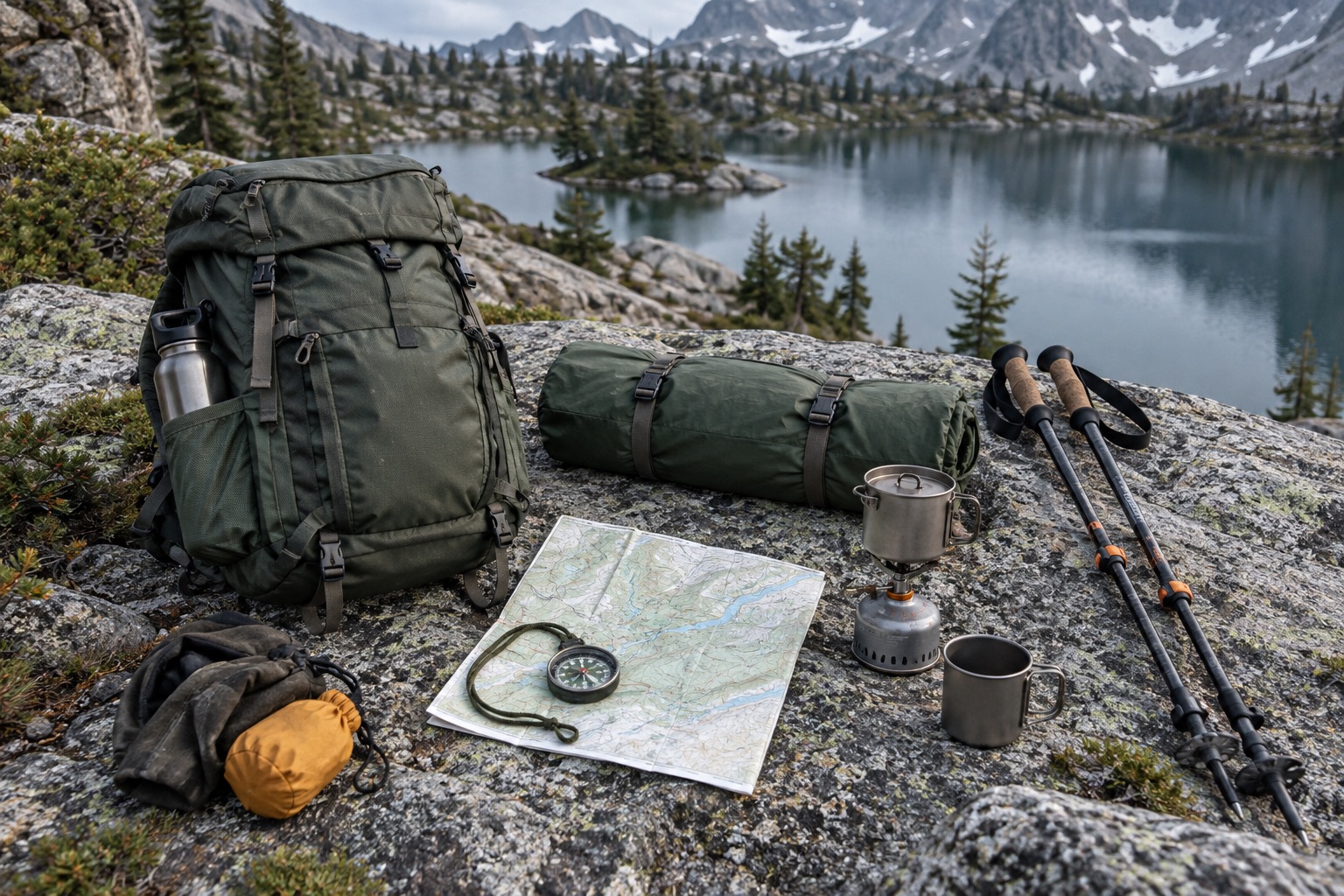
Distance, weather, rest, and repair shape what belongs in a pack. We ask those questions before choosing a material or drawing a product.
Our process is a loop. Each decision has a job on the trail.
Start with the hands-on sequence: carrying, setting up, packing down, and getting moving again.
Remove details that slow the user down or add weight without serving the route.
Handle gear with cold fingers, changing light, wet ground, and a full pack.
Inspect stress points and keep common wear parts simple to replace.
A LONGER LIFE IN THE FIELD
Dry your shelter fully. Brush grit from zips. Check straps before the next departure. Small habits protect the equipment you rely on.
IN THE KIT